

Philosophy & sustainability
In Concordia Cum Natura
Sustainability at Vintre Møller is treated as a production system — water, energy, soil, neighbours — not a paragraph added after the bottles are filled.
Water
A well that was here first.
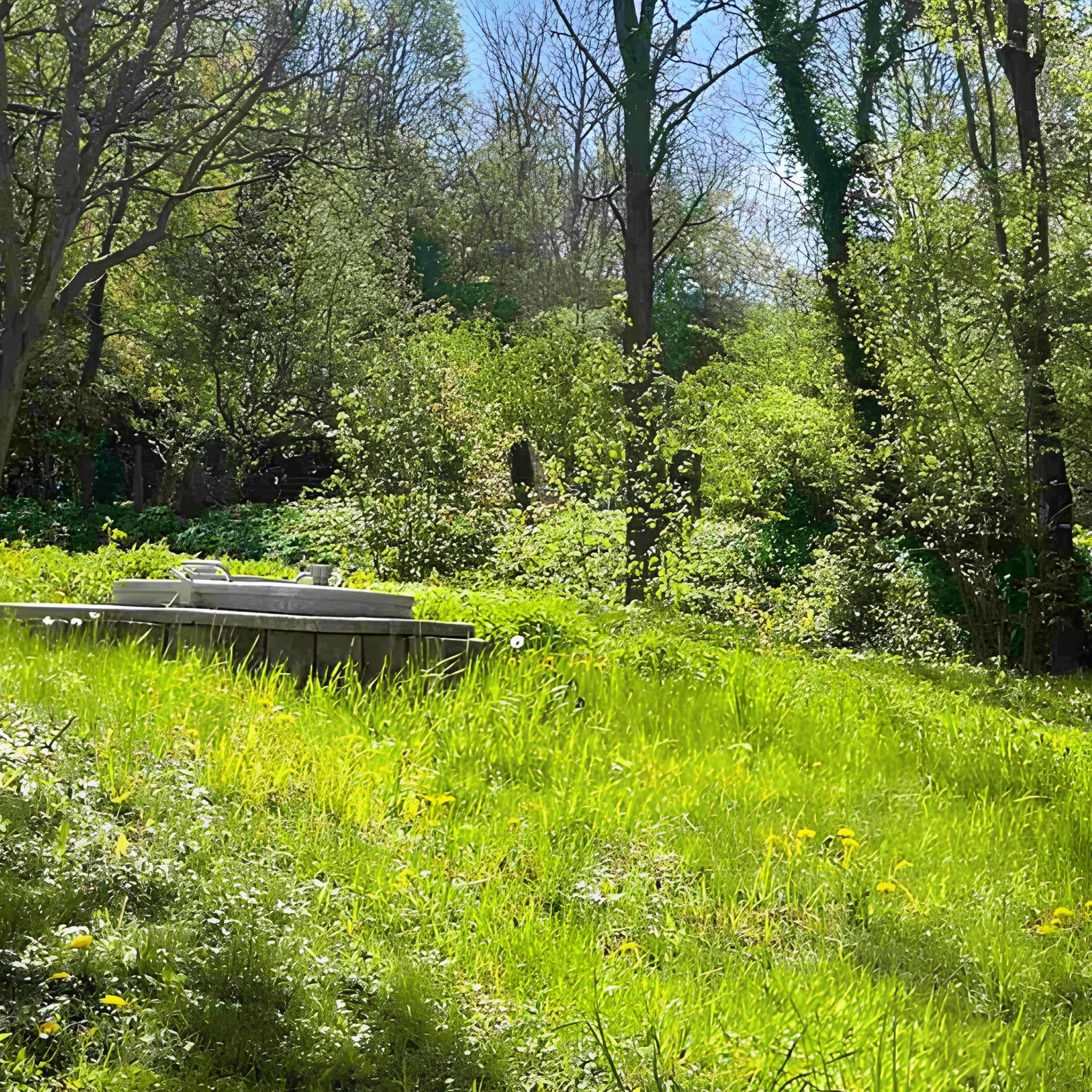
The artesian well is ten metres deep. Water under natural pressure rises ready to drink. The distillery has said it gives about 50,000 litres a day, and that neighbouring houses may share it. High-proof spirit — including, in earlier years, gins distilled in England — has been cut with this water at the mill, so the last thing the spirit meets is the place it will be bottled.
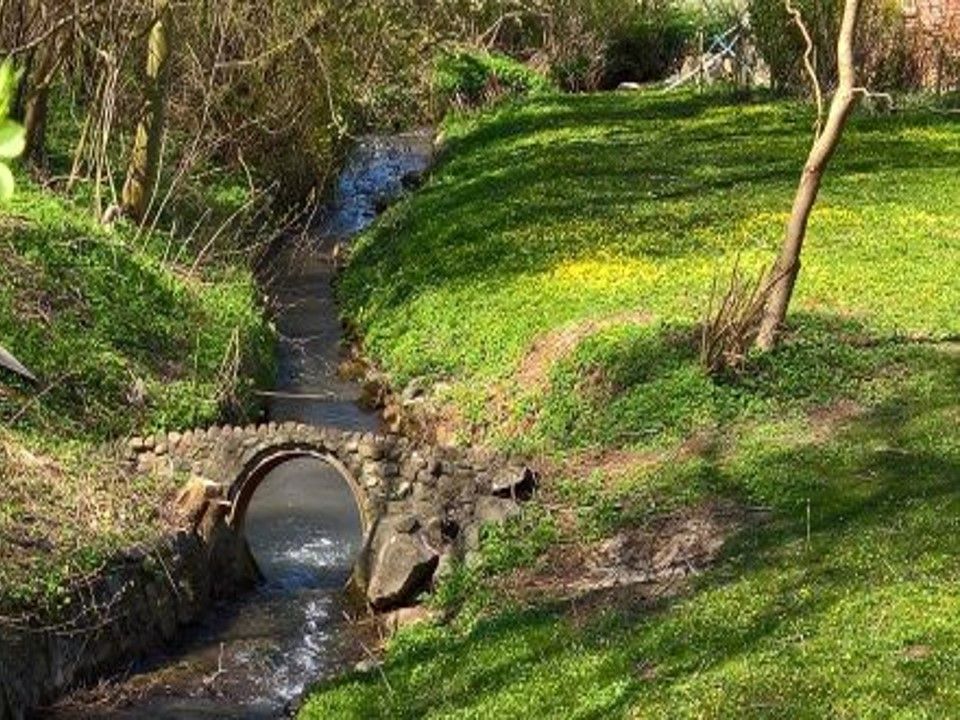
In the still, water is also the condenser’s cooling agent. The 2020 plan was to take that waste heat back into the buildings with a water-to-air heat pump. Organic soil, richer in organic matter, holds water better and keeps synthetic pesticides out of the stream that made the mills possible in the first place.
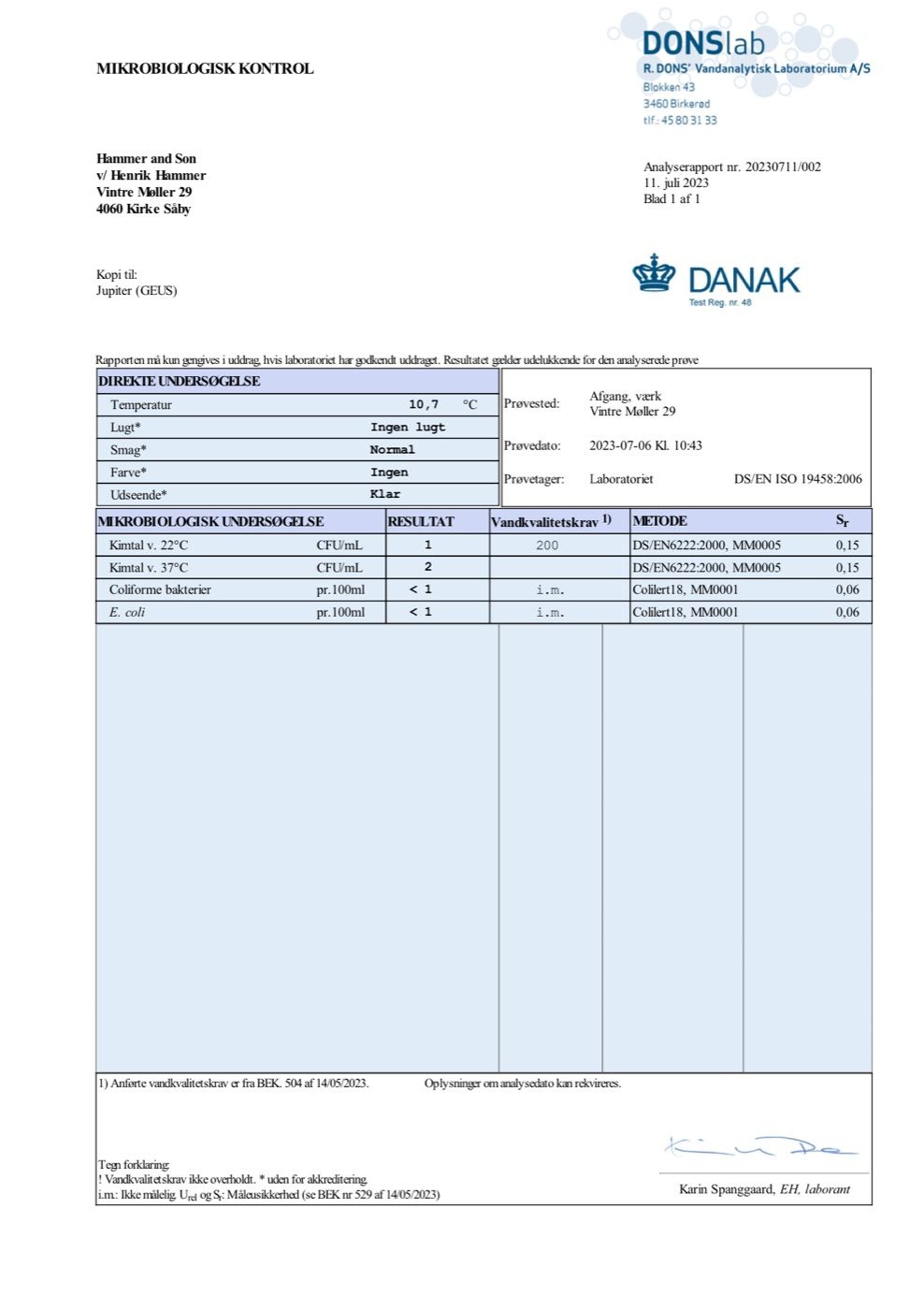
The well is not a slogan. It is a sample. In July 2023 the laboratory took the outlet at the works: clear, without odour, and within the drinking-water limits then in force. A copy was filed with Jupiter — the national groundwater archive at GEUS.
Organic, as a management system
Vintre Møller Destilleri is a certified organic company. In Danish terms that means state control and the Ø mark — Denmark having passed the world’s first ecology law in 1987. The report describes a holistic approach: soil fertility, biological cycles, no pesticides or synthetic fertiliser, short supply lines. After barley is harvested, crop remains are returned to the ground rather than forcing an intermediate crop — a regenerative habit that keeps carbon in the field.
Energy that does not pretend
In 2020 the distillery held a RECS certificate from OK Vindmøller: Danish wind matched to consumption. Lighting was switched to LED. Solar on the estate was designed the following year, with a payback the report estimated at under seven years — preferred, in the long run, to purchased wind because the roof would then answer to the season.
A circle, not a slogan
Birch sap comes from Birthes Minde, an organic farm. Spent grain goes back as feed. Cocoa shells from Friis-Holm join the same local loop that sends spirit the other way into chocolate. The cluster is called En del af Herslev. Waste is sorted to Lejre’s twelve fractions. Glass is chosen because it can be remade forever; Saverglass, the cited bottle maker, is a UN Global Compact participant. Gin is also offered in a ten-litre bag-in-box — fewer bottles, less CO2, less freight.
More life on the same land
Two beehives went in during 2020. Owl boxes replaced a felled wood, and owlets followed. A 700-square-metre pond for the European fire-bellied toad was planned with Copenhagen Zoo — the species is rare enough in Denmark to be protected. The sea eagle uses nearby Ordrup forest. None of this bottles well. All of it is the point of owning a mill instead of a logo.
People, not only plants
The report records local hiring, including through the municipal job centre, and training places for people with particular needs. In 2020 the stills also made a geranium and pink-grapefruit sanitizer for restaurants and the school in Kirke Såby. A share of that income was pledged to WSET scholarships. The house sponsored a defibrillator for the local sports hall. Social responsibility, here, is listed beside the well and the barley — another system, not a separate brochure.
The record
What can be opened.
This page is a reading of the documents, not a substitute for them. One is a sample of the well. The other is the mill’s first account of how it meant to work.
The argument
Craft over scale is not an aesthetic. It is how the numbers stay honest.
Transporting distillate undiluted, the 2020 report estimated, saved on the order of 18.7 tonnes of CO2 a year. Three of five employees lived locally. The largest emissions sat in bottles and bought-in high-proof spirit — which is why the estate’s own stills, grain, and water matter. Quality is the visible result. The invisible one is a shorter chain.